
Market Insights
Wind Energy in India: Harnessing its Potential and Future Outlook
Leveraging a robust manufacturing base and 1163.9 GW potential to meet India's net-zero ambitions.
18 Mar 2025
India stands as the fourth-largest wind energy producer globally, boasting an installed capacity of approximately 48 GW as of March 2025. Fueled by a robust indigenous wind power industry and progressive government policies, the nation is leveraging its staggering 1163.9 GW wind potential (at 150 meters) to meet ambitious renewable energy targets, including 500 GW of non-fossil energy by 2030.
With a manufacturing base capable of producing 18,000 MW annually—70-80% indigenized—India's wind sector is a cornerstone of its clean energy strategy.
India's Wind Energy Potential: A Data-Driven Breakdown
India's wind resources are immense, site-specific, and concentrated primarily in eight windy states. The National Institute of Wind Energy (NIWE), through over 900 wind-monitoring stations, has mapped this potential at various heights.
| State | Potential at 120m (GW) | Potential at 150m (GW) |
|---|---|---|
| Andhra Pradesh | 74.90 | 123.3 |
| Gujarat | 142.56 | 180.8 |
| Karnataka | 124.15 | 169.3 |
| Madhya Pradesh | 15.40 | 55.4 |
| Maharashtra | 98.21 | 173.9 |
| Rajasthan | 127.75 | 284.2 |
| Tamil Nadu | 68.75 | 95.1 |
| Telangana | 24.83 | 54.7 |
| Total (8 States) | 676.55 | 1136.7 |
| Others | 18.95 | 27.1 |
| Grand Total | 695.50 | 1163.9 |
Gujarat and Rajasthan lead with potentials of 180.8 GW and 284.2 GW at 150 meters, respectively, while Tamil Nadu, with over 10 GW installed, remains the frontrunner in operational capacity. Offshore wind adds another dimension, with an estimated 70 GW potential along the coasts of Gujarat and Tamil Nadu, driven by higher wind speeds (40-50% capacity utilization vs. 25-30% onshore). However, no offshore projects are operational as of 2025, despite ambitious targets of 30 GW by 2030.
Current Landscape: Growth and Industry Dynamics
Installed Capacity and Progress
As of March 2025, India's wind energy capacity stands at approximately 48 GW, up from 45 GW in early 2024. The sector is supported by technological advancements like turbines up to 5.2 MW, positioning India behind only China, the USA, and Germany.
Recent Developments
The waiver of inter-State Transmission System (ISTS) charges for projects commissioned by June 2025 has boosted inter-state power sales. Additionally, the shift to Tariff-Based Competitive Bidding has driven tariffs down to ₹2.5–3/unit.
Government Policies and Initiatives: A Supportive Framework
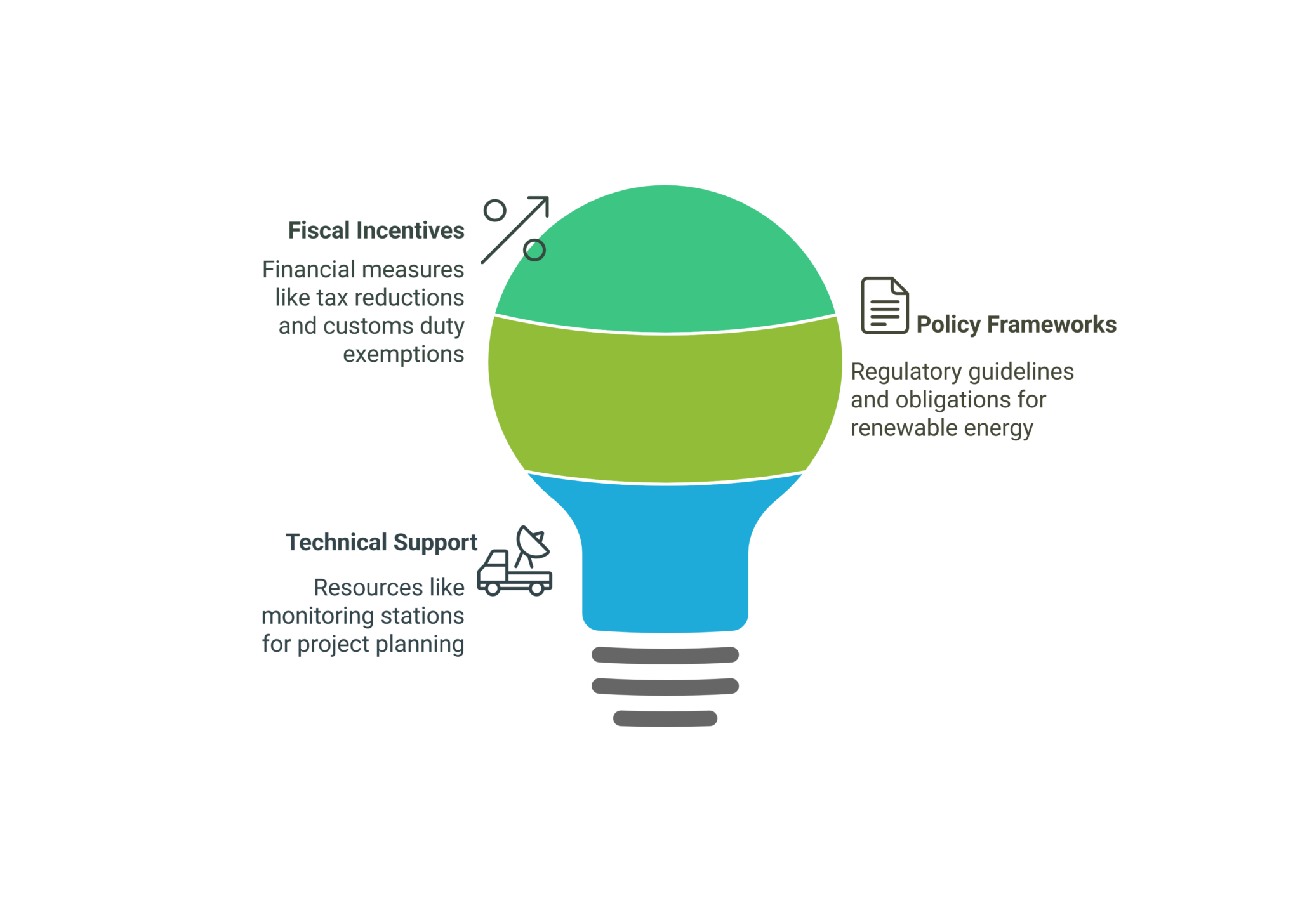
The Indian government has implemented a multi-pronged strategy to promote wind energy:
1. Fiscal and Financial Incentives
- Accelerated Depreciation: Reduces tax liability for developers.
- Concessional Customs Duty: Exemptions on wind generator components.
- Generation-Based Incentives (GBI): Available for projects commissioned before March 31, 2017.
- ISTS Charge Waiver: For inter-state wind power sales until June 2025.
2. Policy Frameworks
- Wind Renewable Purchase Obligation (RPO): Mandates 43.33% renewable energy procurement by 2030, though only four states—Himachal Pradesh, Karnataka, Andhra Pradesh, and Tamil Nadu—met the 19% target for 2020-21.
- Tariff-Based Competitive Bidding Guidelines: Standardizes procurement for cost-effective rates.
- National Wind-Solar Hybrid Policy (2018): Encourages hybrid systems for optimized supply.
- Offshore Wind Energy Policy: Targets coastal potential, though progress is in early stages.
3. Technical Support
NIWE's 900+ monitoring stations and wind potential maps (50m, 80m, 100m, 120m, 150m) guide site selection and project planning.
Opportunities for Investors and Developers
Offshore Wind Farms: Untapped 70 GW potential offers higher efficiency and larger project scales, with Gujarat and Tamil Nadu as prime zones. Repowering Aging Turbines: Over 25 GW of old turbines (
Challenges Slowing Progress
Despite its potential, the wind sector faces significant hurdles:
- Land Acquisition: Projects require 7-8 acres per turbine, leading to delays in permits and clearances.
- Grid Infrastructure: The current transmission network struggles with wind’s intermittent nature, necessitating green energy corridors and smart grids.
- Financial Risks: Aggressive bidding has slashed tariffs to ₹2.5-3/unit, reducing profitability. Discom defaults also strain finances.
- Policy Gaps: No formal framework exists for repowering or recycling old turbines, limiting efficiency gains.
- Environmental and Social Impacts: Ecological concerns and community resistance require careful mitigation.
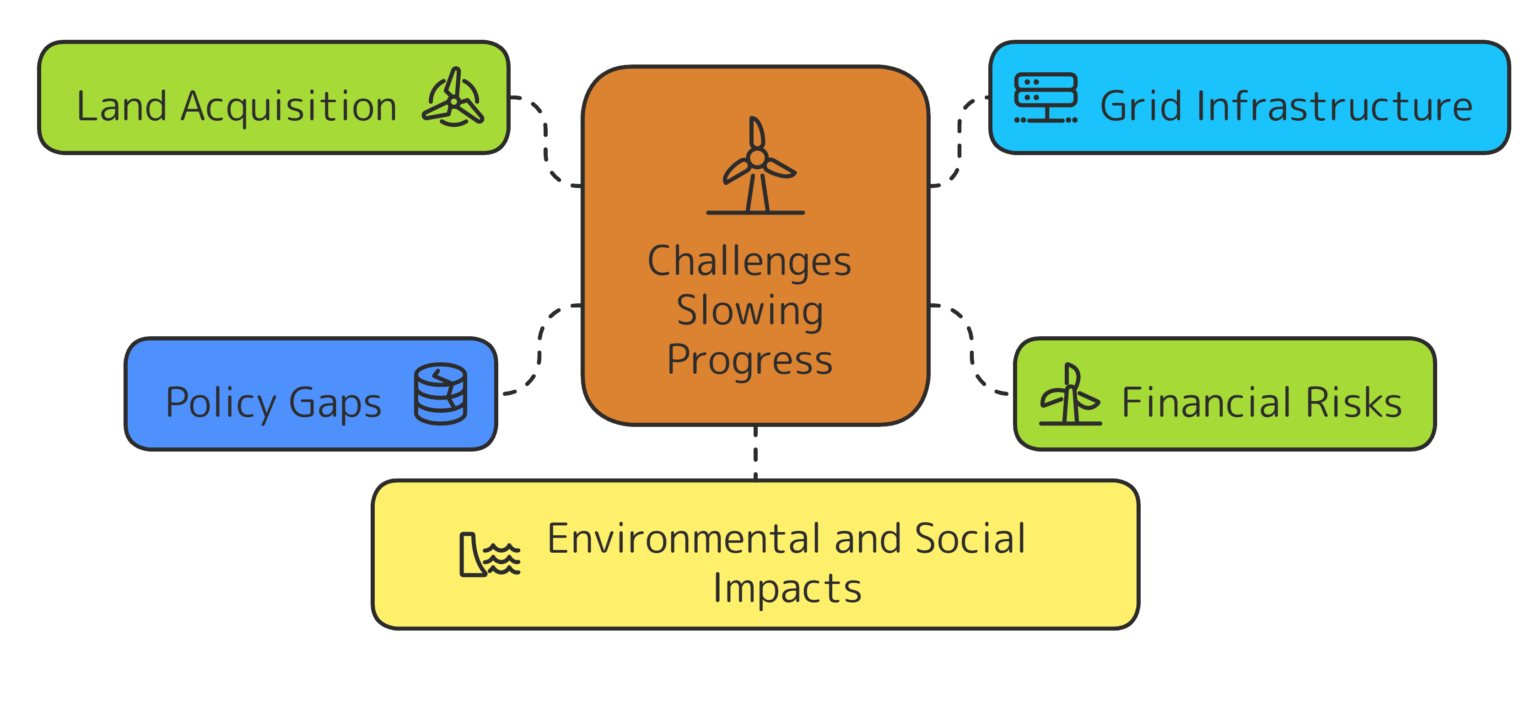
Key hurdles impacting the wind energy sector's growth.
To unlock its wind potential, India must:
- Strengthen Grid Infrastructure: Invest in smart grids, energy storage, and transmission upgrades to handle the variable nature of wind energy.
- Boost R&D: Drive innovation in offshore technology, turbine efficiency, and hybrid systems.
- Streamline Approvals: Implement single-window clearances for land acquisition and permits to reduce project delays.
- Skill Development: Train a specialized workforce for offshore, hybrid, and repowering projects.
- Policy Evolution: Finalize repowering and recycling guidelines to maximize the efficiency of existing high-potential sites.
Conclusion
India’s wind energy sector, with an installed capacity of 48 GW and a staggering potential of 1163.9 GW, is at a pivotal moment. Backed by a world-class manufacturing base and supportive policies like Renewable Purchase Obligations (RPO) and ISTS waivers, it is a primary driver toward the 2030 renewable goals.
By successfully addressing challenges—such as grid upgrades, financial sustainability, and land issues—while capitalizing on offshore wind, repowering, and hybrids, India will solidify its role as a global wind energy leader and advance its net-zero ambitions.
www.hexaclimate.com – Your Net-Zero Partner!
- https://l1nq.com/1BZI6
- https://l1nq.com/BConX
- https://l1nq.com/eBMqB
- https://encr.pw/CvdvB
- https://l1nq.com/qmbAQ